What a quiet dishwasher means in dB
Dishwasher noise is quoted in decibels, and the modern range runs from about 44 to 50 dB. As a guide, anything around 44 to 46 dB is genuinely quiet — you can run it overnight or hold a conversation nearby without it intruding. The 47 to 50 dB band is normal and perfectly livable, but more noticeable, particularly in an open-plan room. Below 44 dB is exceptional and usually reserved for premium machines. The key thing to understand is that decibels are logarithmic, not linear: a 3 dB reduction roughly halves the perceived sound energy, so the gap between a 49 dB machine and a 44 dB one is far bigger than the small numbers suggest. If quiet matters to you, those few decibels are worth paying for.
Where the noise matters most depends on your kitchen. In a separate, closed-off kitchen, even a 49 dB machine is a non-issue — you won't hear it from the living room. In an open-plan kitchen-diner, or a flat where the kitchen is near a bedroom, the difference between quiet and average becomes something you notice every evening. Match the priority to your layout.
The quietest machines on our list
The quietest dishwasher we recommend is the Miele G 5310 SC Active Plus at 44 dB — close to silent in normal use, and the obvious choice if quiet is your top priority and budget allows. It backs that up with the best cleaning and drying on our list, so you're not trading performance for peace. Just behind it is the Bosch Series 4 at 46 dB, which is genuinely quiet, far more affordable, and our best overall pick for good reason — for most open-plan kitchens it's the sweet spot of quiet running and sensible price.
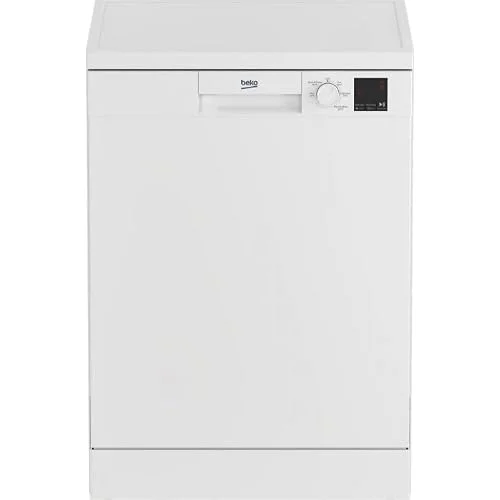
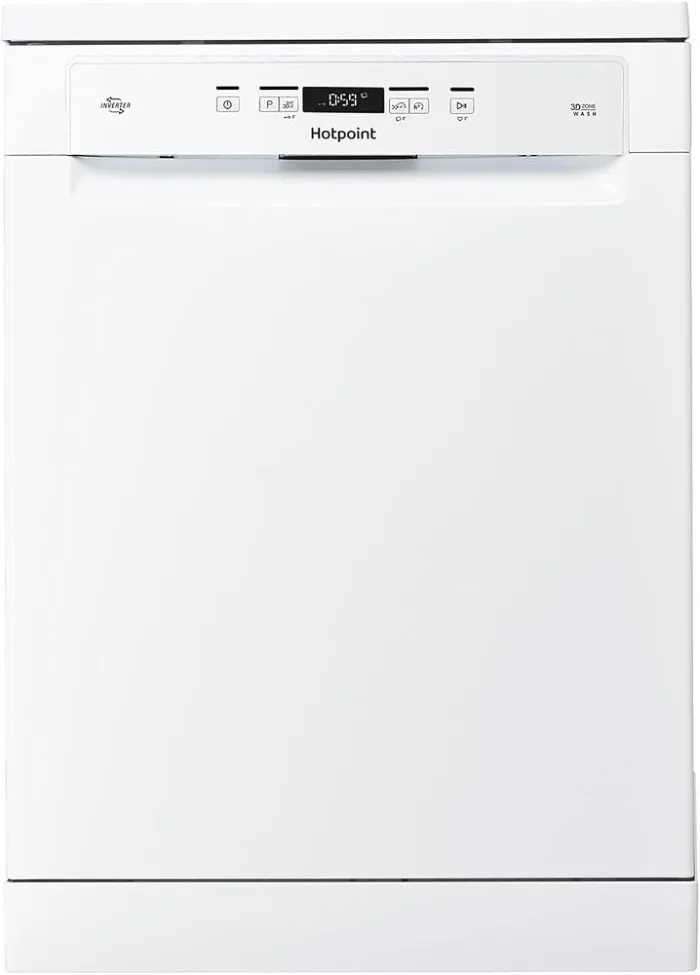
The remaining machines sit a little higher. The Hotpoint HF5C2615WG (47 dB) and the Bosch Serie 2 slimline (48 dB) are still quiet enough for most kitchens and easy to run overnight. The Beko DVN05C20W and Hisense HS622E90WUK (both 49 dB) are on the louder side of the range — completely fine in a separate kitchen, but worth thinking twice about if your kitchen is open-plan. None of these is loud by older standards; it's simply a question of how exposed your living space is to the machine.
Making any dishwasher run more quietly
You can do a surprising amount to reduce the noise of whatever machine you have. First, run it on a longer eco programme rather than a fast cycle — eco washes use lower water pressure and run more gently, so they're audibly quieter as well as cheaper. Second, make sure the machine is perfectly level and not touching the cabinet sides, since vibration transmitted into the units is a major source of noise; the adjustable feet are there for exactly this. Third, use the delay-start timer to run the machine overnight, when the house is quiet and you're not in the room anyway — and, on a time-of-use tariff, when electricity is cheaper too. Finally, load carefully so crockery doesn't rattle against the racks during the cycle. None of this changes the dB rating, but together it makes a real difference to how the machine sounds in your kitchen.
Our advice in one paragraph
If quiet is your priority and budget allows, the Miele G 5310 SC at 44 dB is the quietest machine here and the best performer too. For most open-plan kitchens, though, the Bosch Series 4 at 46 dB is the smarter buy — genuinely quiet, much cheaper and our best overall pick. If your kitchen is closed off, noise matters far less and you can prioritise value or capacity with the Beko or Hotpoint. Whatever you choose, run it on eco, keep it level and use the timer, and read our buying guide for the rest.